PRIMALTAby Prima Vita · Dubai
Book an assessment

Interval breathing therapy · Physician-led

Forty minutes at
four thousand metres.
Without leaving Dubai.

You sit in a chair and breathe through a soft mask. Over forty minutes the air is moved — thinner, ordinary, richer — along a curve written for you and nobody else. Nothing to endure, and nothing to recover from afterwards.

40–60 min session Seated · non-invasive Children to seniors
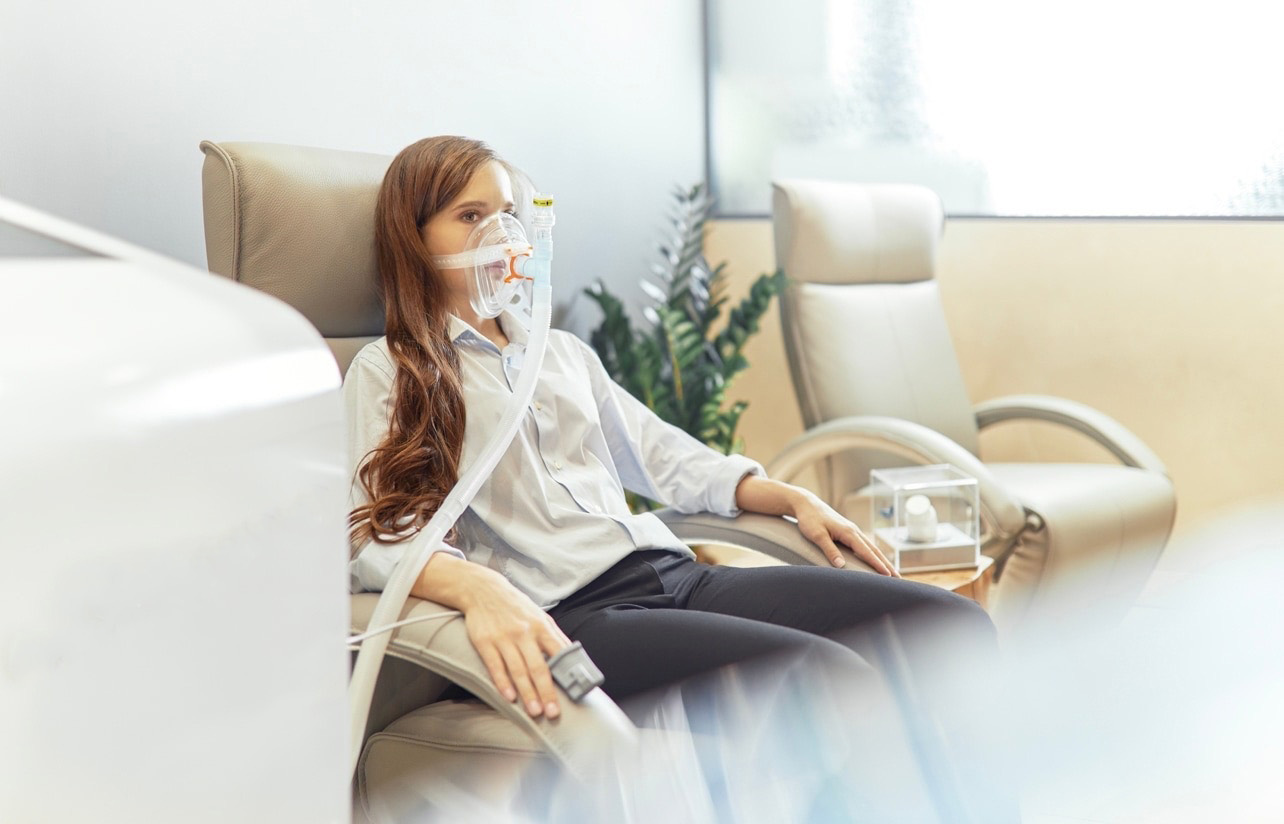
A woman sits back in a reclining chair breathing through a clear soft mask connected by a ribbed hose to a console, a pulse oximeter clipped to her finger, in a bright clinic lounge with a plant and daylight behind her.
A session in progress. Seated, awake, free to read or take a call.
A layer of cloud seen from above at a mountain summit, stretching to a pale horizon under a soft blue sky.
Above the cloud layer, the air holds roughly half the oxygen it does at sea level. Your programme decides how far towards that we go — and for how long.

The method

Three states of air. Your programme decides which.

Most breathing therapies do one thing to one specification. Ours moves between three, and which two it alternates — and how deeply — is a clinical decision made for each patient, not a setting left where the last person put it.

7–16%

Hypoxia

Thinner than the air outside. At 11.5% it is the equivalent of standing on the summit of Mont Blanc — a mild, controlled shortage that asks the body to adapt.

21%

Normoxia

Ordinary sea-level air. Used as the recovery phase for patients who should not be given elevated oxygen, and as the gentle option for children and frail patients.

25–33%

Hyperoxia

Richer than anything you breathe naturally. Used to restore saturation quickly between intervals — which is what makes the whole session comfortable at rest.

The protocol

Your session, before you sit in it.

Three of the programmes we run, drawn to scale. Switch between them and watch what changes — the depth of the trough, the height of the recovery, and how far your blood oxygen is actually asked to travel.

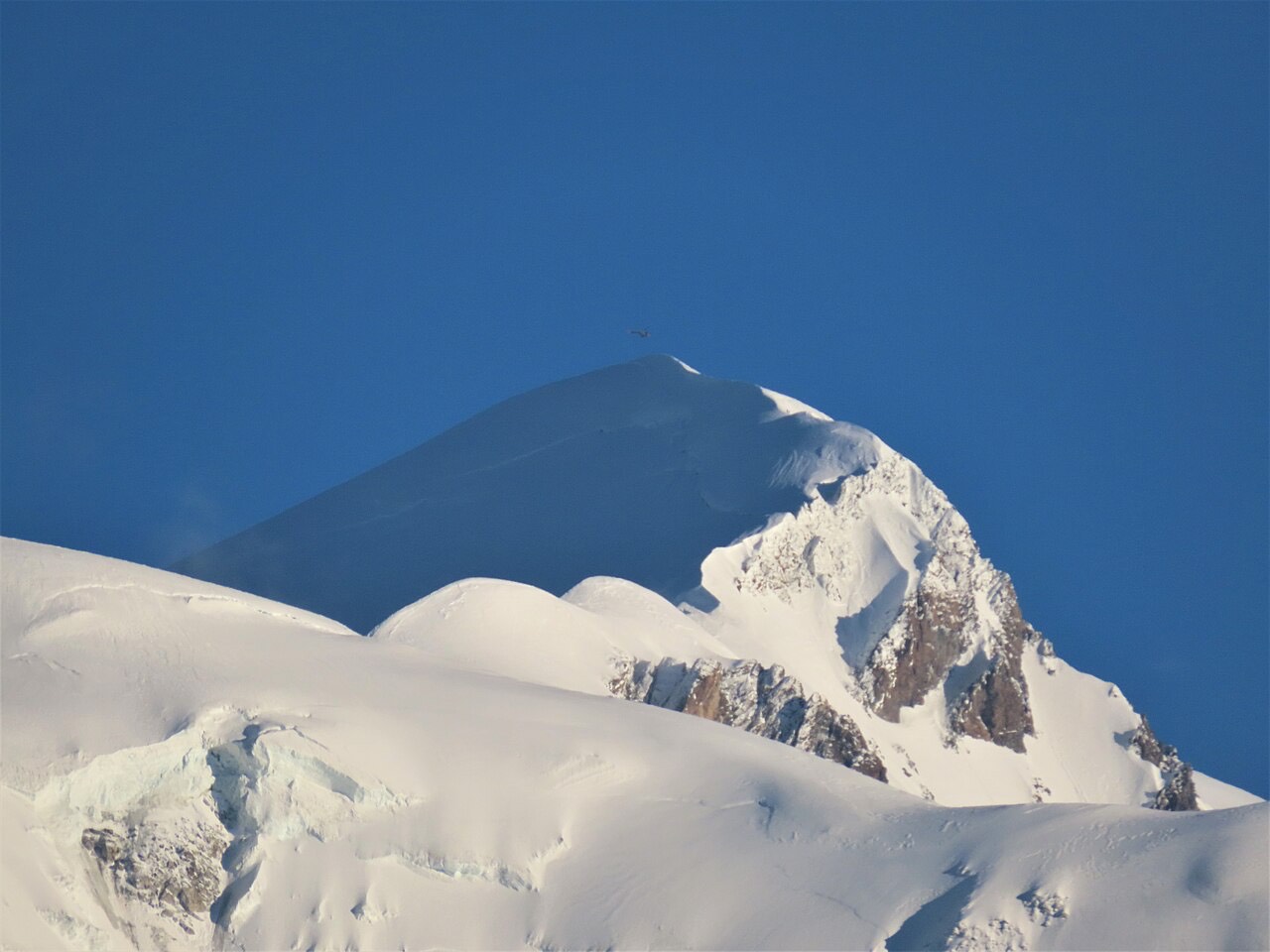
The snow-covered summit dome of Mont Blanc rising above a ridge of glaciers.
At 11.5% oxygen the instrument reads an equivalent altitude of roughly 4,750 metres — the summit of Mont Blanc, reached from a chair on Sheikh Zayed Road.

Select a programme

The standard programme. Deepest adaptive load, and the one most of the published research uses.

Elapsed
00:00
Inspired O₂
20.9%
Blood SpO₂
98%
Equivalent altitude
Sea level
Phase
Baseline
Drag across the chart, or use the slider, to step through the session.

42

Litres per minute

The rate at which the system can deliver your mixture — among the highest available, and the single thing you will notice most.

Why it feels different

You should never feel you are pulling air through a straw.

Interval breathing therapy is only as good as a patient's willingness to finish the course. The most common reason people stop is not the thin air — it is the effort of breathing itself. If the machine cannot supply air as fast as you want to inhale, every breath becomes work, and forty minutes of work is not therapy.

A high flow rate removes that resistance. Air is there when you ask for it, at the concentration prescribed, held to within half a percentage point for the whole phase. Patients describe it as breathing normally — which is exactly the intention.

It matters most at the extremes: for a child, for an elderly patient, for someone whose lungs are the reason they came. Those are precisely the people a lower-capacity system struggles to serve.

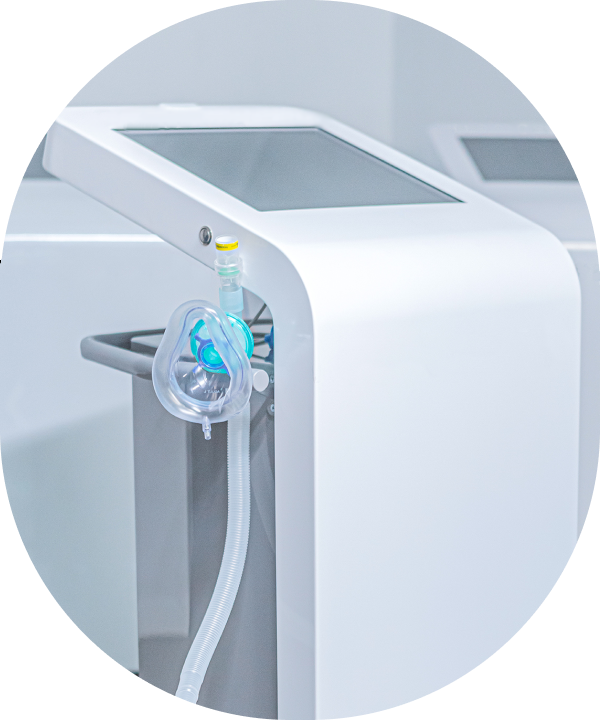
Close detail of the treatment console: a white cabinet with a dark touchscreen at the top and a clear soft mask hanging on a ribbed hose at the side.
The mask is a simple filtered consumable — no cylinders, no gases delivered to site.
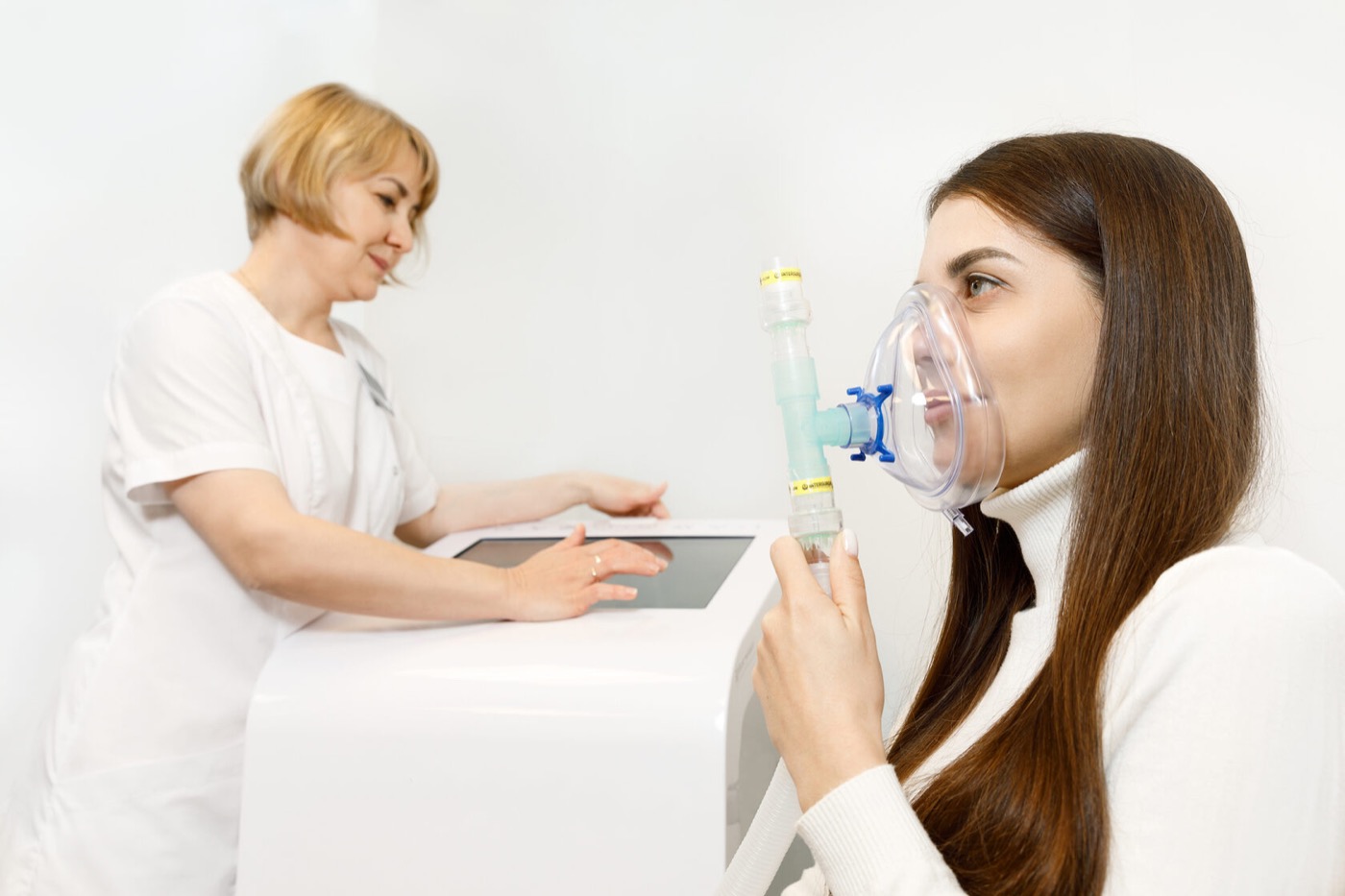
A clinician in white stands at a touchscreen console adjusting a session while a seated patient holds a clear mask to her face, connected to the console by a ribbed hose.
Every session is operated by a clinician and adjusted live — not started on a timer.

Personalisation

The same room. Very different sessions.

Before your first session we run a hypoxic sensitivity test — we move the oxygen concentration gradually and measure how your saturation actually responds. That curve is yours, and it sets your programme. From there the system runs closed-loop on your pulse and saturation, enriching the mixture automatically if either crosses the limits set for you.

Children

Shallow hypoxic depth or none at all, shorter phases, a parent in the room. Often a normoxia–hyperoxia programme with no hypoxic load whatsoever.

Athletes

Deeper troughs, more cycles, scheduled around training blocks rather than around convenience. Adaptation without leaving sea level or losing a training week.

Older patients

Gentler gradients and longer recovery phases, with the option to remove elevated oxygen entirely where it is not appropriate.

Specific pathologies

Metabolic, cardiovascular, respiratory, post-viral and sleep-related conditions each take a different shape of curve, set by the treating physician.

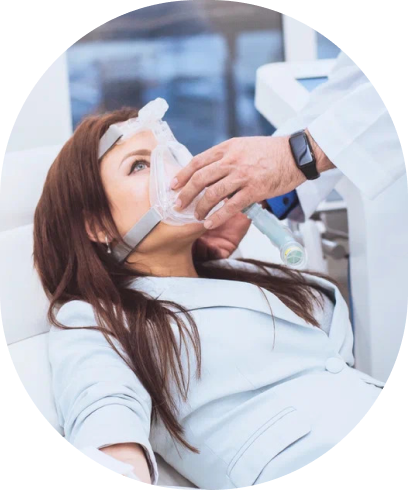
A clinician fits a soft breathing mask to a woman reclining in a treatment chair.
The mask is fitted and checked for seal at the start of every session.

Session length is adjustable from two minutes to two hours, in one-minute steps. That range is not a specification for its own sake — it is what allows a first session for a nervous child and a full protocol for a competitive athlete to run on the same equipment, in the same week.

Programmes can alternate hypoxia with hyperoxia, hypoxia with ordinary air, or run the enriched phase first and the thin phase second. Where elevated oxygen is unsuitable, it is simply not used.

Hypoxic range, adjustable
7 – 16% O₂
Normoxic phase
21% O₂
Hyperoxic range
25 – 33% O₂
Concentration held to
± 0.5%
Flow rate
42 L/min
Oximetry refresh
every 0.3 s
Session length
2 – 120 min
Typical course
10 – 30 sessions

Five programmes

What people come in for.

01 · After the virus

Post-viral and long-COVID fatigue

For people whose exercise tolerance never came back. This is the indication with the most direct clinical evidence behind it — a controlled inpatient rehabilitation trial measured improvement in exercise capacity and functional outcome.

Controlled clinical pilot trial, long COVID rehabilitation

02 · Training load

Athletes and heavy trainers

Altitude adaptation without a training camp, and recovery capacity between hard blocks — for Dubai's triathlon, Hyrox and marathon population, who train at sea level in heat and cannot disappear to the Pyrenees for a month.

Practitioner review: hypoxic training at sea level

04 · Cognitive

Executive fatigue and burnout

For the long-hours professional whose problem is not sleep but the quality of the fourth hour of thinking. Research has examined adaptive potential, endurance and working capacity of the brain.

Frontiers in Neuroscience, 2022

05 · Healthy ageing

Preconditioning after sixty

The longevity case: maintaining the body's capacity to tolerate stress as it ages. Studied as personalised preconditioning in older adults, and as an adjunct in cardiovascular rehabilitation.

Witten/Herdecke University, coronary heart disease

Not sure which?

Start with the assessment

Sixty minutes with a physician, your own hypoxic response curve, and a written recommendation — including, where it applies, the recommendation not to proceed.

The literature

We would rather show you the papers.

Interval hypoxic–hyperoxic therapy has a genuine peer-reviewed literature — modest in size, mixed in quality, and worth reading before you spend anything. Every study we cite is linked in full. We make no claim about what it will do for you specifically.

Sessions and courses

One session tells you how it feels. A course is what changes anything.

Adaptation needs repetition — two or three sessions a week, over weeks rather than days. Every patient is assessed and safety-screened by a physician before the first session, and we will say plainly if a course is not appropriate for you.

Single

AED 300 · one session

AED 300 a session.

A single session

  • The full 40–60 minute protocol, not a taster
  • Programme set by a physician on the day
  • Pulse and saturation monitored throughout
  • Your session curve saved to your record

Course

AED 2,500 · 10 sessions

AED 250 a session — AED 50 less each time.

The ten

  • Two to three sessions weekly, four to five weeks
  • Hypoxic depth re-set at session 5
  • Every session curve stored to your record
  • End-of-course physician review

Full programme

AED 7,000 · 30 sessions

AED 233 a session — AED 67 less each time.

The thirty

  • Ten to twelve weeks — the post-viral and metabolic programmes
  • Programme re-set every fifth session
  • Repeat bloods at session 15
  • Three physician reviews included

Book

Start with the assessment.

Sixty minutes, one physician, your own response curve to take away — whether or not you go on to a course.

+971 50 321 9405

Sun – Sat · 09:00 – 21:00

This opens WhatsApp with your details ready to send. We reply within one working day, we do not share your details, and we do not add you to a marketing list unless you ask.